Onn Walkie Talkie Manual: A Comprehensive Guide
Navigating Onn walkie-talkie features can be tricky! This guide offers troubleshooting for unresponsive remotes, antenna issues, and voice prompt controls, ensuring a smooth user experience.
Welcome to the world of Onn walkie talkies! These devices offer a convenient and reliable means of short-range communication, perfect for various activities like outdoor adventures, events, or simply staying connected with family and friends. Onn walkie talkies are designed for ease of use, providing instant communication without the need for cell service or monthly fees.
However, like any electronic device, understanding its features and potential issues is crucial for optimal performance. Recent online discussions highlight common user concerns, including remote control responsiveness with Onn Roku TVs, difficulties restoring TV antenna channels, and managing voice prompts on Onn soundbars. These issues, while specific to other Onn products, demonstrate the importance of a comprehensive manual for troubleshooting.
This guide aims to provide a detailed overview of your Onn walkie talkie, covering everything from basic operation to advanced features and troubleshooting steps. We will explore each component, explain how to use them effectively, and offer solutions to common problems, ensuring you get the most out of your device.
Understanding the Basic Components
Familiarizing yourself with the parts is key! Your Onn walkie talkie typically includes several essential components. The Push-to-Talk (PTT) button initiates transmission – pressing and holding allows you to speak. A channel selector lets you choose from available frequencies, minimizing interference. The volume control adjusts the speaker output for clear reception.
Many models feature an antenna, crucial for signal strength and range. A power button controls the device’s on/off state. Some units include a battery compartment for replaceable batteries, while others utilize rechargeable batteries with a charging port. Look for a microphone, usually located near the PTT button, and a speaker for receiving transmissions.
Considering issues reported with other Onn devices, like unresponsive Roku TV remotes, ensure all buttons are functioning correctly. While not directly related, it highlights the importance of checking physical components. Understanding these basic parts will help you operate and troubleshoot your walkie talkie effectively.
Powering On and Off
Simple operation is essential for quick communication! To power on your Onn walkie talkie, locate the power button – it’s usually prominently placed on the device. Press and hold this button for a few seconds until you hear a confirmation tone or see an indicator light illuminate. This confirms the device is active and ready for use.
To power off, repeat the process: press and hold the power button until the indicator light turns off or you hear a corresponding sound. Avoid simply tapping the button, as this might accidentally activate the PTT function instead.
Drawing parallels from reported issues with Onn Roku TVs becoming stuck in recovery mode, ensure a complete power cycle if the device seems unresponsive. A full shut down and restart can resolve minor glitches. If the device fails to power on, proceed to the ‘No Power’ troubleshooting section later in this manual.
Battery Installation and Management
Proper battery care maximizes your walkie talkie’s performance! Most Onn walkie talkies utilize standard AA batteries. To install, locate the battery compartment – typically on the back or bottom of the device. Open the compartment cover, observing the polarity markings (+ and -) inside. Insert the batteries accordingly, ensuring a secure fit.
For optimal performance, use fresh, alkaline batteries. Avoid mixing old and new batteries, or different battery types. Regularly check battery levels, especially during extended use. Weak batteries significantly reduce transmission range and clarity.
Similar to troubleshooting unresponsive Roku remotes, sometimes a simple battery replacement resolves operational issues. If the device exhibits intermittent power or reduced range, begin by replacing the batteries. Dispose of used batteries responsibly, following local regulations. Consider rechargeable batteries for cost savings and environmental benefits.
Charging Procedures (if applicable)
If your Onn walkie talkie features rechargeable batteries, follow these charging guidelines. Locate the charging port – usually a micro-USB or USB-C port. Connect the provided charging cable to the walkie talkie and a suitable USB power source, like a computer or wall adapter.
A charging indicator light will illuminate, typically red while charging and green when fully charged. Initial charging may take several hours. Avoid overcharging, as this can reduce battery lifespan. Disconnect the charger once the indicator light turns green.
Similar to resolving issues with Onn Roku TVs, ensuring a stable power connection is crucial. If charging isn’t occurring, try a different USB cable or power adapter. Do not use damaged charging cables. Only use the charger specifically designed for your Onn walkie talkie to prevent damage. Regularly check the charging port for debris.
Understanding the Channels
Onn walkie talkies utilize multiple channels for communication, preventing interference from other users. Channels are essentially different radio frequencies. More channels offer greater flexibility and reduce the chance of accidental conversations with unrelated parties.
Many Onn models include both standard FRS (Family Radio Service) channels and privacy codes. FRS channels are pre-assigned frequencies regulated by the FCC. Privacy codes aren’t true encryption; they’re simple tones that filter out some unwanted transmissions. Think of them like changing the station on a radio – it doesn’t secure the signal, but it can reduce noise.
Similar to regaining lost antenna channels on an Onn Roku TV, selecting the optimal channel is key. Channels prone to interference in your area should be avoided. Experiment with different channels to find the clearest signal. Understanding channel usage is vital for effective communication.
Selecting a Channel
Choosing the right channel on your Onn walkie talkie is crucial for clear communication. Begin by turning both walkie talkies on and navigating to the channel selection menu – typically a dial or button press. Start with channel 1 and test communication. If you experience static or interference, similar to losing antenna channels on an Onn Roku TV, move to the next channel.
Repeat this process, testing each channel until you find one with minimal interference. Remember that conditions can change, so periodically re-scan for the clearest channel. Consider the environment; urban areas often have more interference than open spaces.
If using privacy codes, ensure both walkie talkies are set to the same code and channel. Incorrect settings will prevent communication. Experimentation is key to finding the optimal channel for your specific location and needs.
Channel Scanning
Onn walkie talkies often feature a channel scan function to automatically locate active channels. This is particularly useful in environments with potential interference, mirroring the challenges some users face regaining antenna channels on their Onn Roku TVs. To initiate a scan, press and hold the scan button – its location varies by model, so consult your specific device’s diagram.
The walkie talkie will cycle through available channels, pausing briefly on those with activity. Pay attention to the signal strength indicator; a stronger signal generally indicates a clearer channel. Once the scan completes, the device will typically stop on the first active channel it detected.
However, it’s advisable to manually scan and test several active channels to ensure you’ve selected the clearest one for your needs. Remember, scanning doesn’t guarantee interference-free communication, but it’s a valuable starting point.
Private Channels and Codes
Many Onn walkie talkies offer private channels and code options for enhanced security and to minimize interference from other users. These aren’t truly “private” but reduce unwanted eavesdropping. Private channels are typically a subset of the overall available channels, often designated with a specific identifier.
Alongside channel selection, you can often set a CTCSS (Continuous Tone-Coded Squelch System) or DCS (Digital Coded Squelch) code. Both systems require all communicating radios to be set to the same code to establish a connection. This filters out transmissions from radios not using the designated code.
To set a code, navigate through the menu using the control buttons. The display will show available code options. Select a code and ensure all radios in your group are configured identically. Like troubleshooting antenna issues on Onn Roku TVs, proper configuration is key for optimal performance.
Using the Push-to-Talk (PTT) Button
The Push-to-Talk (PTT) button is the primary method for transmitting messages on your Onn walkie talkie. Located prominently on the device, pressing and holding this button activates the microphone, allowing your voice to be broadcast on the selected channel.
Release the PTT button to switch back to receiving mode. It’s crucial to only press and hold the PTT button when speaking, as continuously transmitting when not speaking creates unnecessary noise and drains battery life. Think of it like a remote control – only activate when needed!

Proper PTT etiquette is essential for clear communication. Avoid interrupting others who are already transmitting. Wait for a pause in their transmission before initiating your own. Similar to resolving unresponsive Roku TV controllers, understanding the core function is vital for effective use.
Proper PTT Etiquette
Maintaining clear communication with your Onn walkie talkie relies heavily on proper Push-to-Talk (PTT) etiquette. Before transmitting, always listen to the channel to ensure it’s not already in use. Interrupting another user is disruptive and can lead to missed information.

Speak clearly and concisely when using the PTT button. Avoid lengthy monologues; keep your messages brief and to the point. Remember to release the PTT button immediately after finishing your transmission, allowing others to respond. Just as troubleshooting antenna issues requires patience, respectful communication is key.
Avoid using excessive or unnecessary transmissions. Constant chatter drains battery life and can annoy other users. Think before you speak, and only transmit when you have something important to share. Like fixing a Roku TV stuck in recovery mode, a methodical approach improves results.
Adjusting the Volume
Controlling the audio level on your Onn walkie talkie is crucial for clear communication in varying environments. Most models feature a dedicated volume control knob or buttons, typically located on the side of the device. Rotate the knob clockwise to increase the volume and counter-clockwise to decrease it.
Start with a low volume setting and gradually increase it until you can comfortably hear incoming transmissions. Be mindful of your surroundings; excessively loud volume can be disruptive and potentially damaging to your hearing. Similar to troubleshooting a soundbar’s voice prompts, finding the right balance is essential.
Some Onn walkie talkies may also offer volume level indicators, such as LED lights or a numerical display. Utilize these indicators to accurately set the volume. If you experience static or interference, adjusting the volume may help improve clarity. Remember, clear audio is as important as a functioning remote for a positive user experience.
Troubleshooting Common Issues
Encountering problems with your Onn walkie talkie? Several common issues can arise. If you experience no power, ensure batteries are correctly installed and sufficiently charged (see Battery Installation section). Static or interference can often be resolved by changing channels or moving to a different location, away from potential sources of disruption.
Short range may indicate weak batteries, obstructions, or interference. Try fresh batteries and ensure a clear line of sight between devices. Similar to Roku TV antenna issues, external factors can significantly impact performance. If the device is unresponsive, a reset might be necessary.
Before resorting to a factory reset, try a simple power cycle – turn the walkie talkie off and on again. If problems persist, consult the Factory Reset Procedure section. Remember, like a malfunctioning remote, identifying the root cause is key to a swift resolution. Don’t hesitate to contact Onn support if issues remain unresolved.

No Power
Is your Onn walkie talkie failing to power on? This is a common issue with several potential causes. First, verify battery installation. Ensure batteries are inserted with the correct polarity (+ and -) as indicated in the battery compartment. Even new batteries can be faulty, so test with a different set if possible.
Check the battery contacts for any corrosion or debris, and clean them gently if necessary. If using rechargeable batteries, confirm they are adequately charged. A completely depleted battery will prevent the walkie talkie from functioning. Similar to a Roku TV failing to respond, a power issue can stem from a simple oversight.
If the problem persists after verifying the batteries, inspect the power switch for damage. A faulty switch may prevent proper connection. If none of these steps resolve the issue, contact Onn support for further assistance, as it could indicate an internal hardware problem.
Static or Interference
Experiencing static or interference with your Onn walkie talkie? Several factors can contribute to this. First, consider your surroundings. Buildings, trees, and other obstructions can weaken the signal and introduce noise. Try moving to a more open area for better reception, similar to troubleshooting antenna reception on an Onn Roku TV.
Channel congestion is another common cause. Other users on the same channel can create interference. Attempt switching to a different channel to find a clearer frequency. Explore the channel scanning feature (described elsewhere in this manual) to automatically locate available channels.
Electrical interference from devices like computers or fluorescent lights can also cause static. Move away from these sources. Finally, ensure the antenna is securely attached and undamaged. If the static persists, try resetting the walkie talkie to its factory settings, as a corrupted configuration might be the source of the problem.
Short Range
Is your Onn walkie talkie’s range less than expected? Several factors can limit communication distance. Obstacles like buildings, hills, and dense foliage significantly reduce range, mirroring issues with TV antenna signals. Try elevating your position or moving to a clear line of sight.
Battery power plays a crucial role. Weak batteries diminish transmission power, shortening the range. Ensure both walkie talkies have fully charged or fresh batteries. Check the battery installation to confirm proper contact.
Channel selection can also impact range. Some channels may experience more interference than others. Experiment with different channels, utilizing the scan function to identify clearer frequencies. Finally, remember that walkie talkies are designed for short-to-medium range communication; exceeding specified limits isn’t guaranteed, much like expecting a Roku TV to pick up distant signals without a good antenna.
Resetting Your Walkie Talkie
Experiencing persistent issues with your Onn walkie talkie? A reset can often resolve software glitches and restore factory settings. Similar to a Roku TV stuck in recovery mode, a reset can bring things back to normal. However, unlike a TV hard shut-off, the process for walkie talkies varies by model – consult your specific device’s documentation.
Typically, a reset involves holding down a specific combination of buttons (often the PTT and power button) for a set duration. This will clear any customized settings, returning the walkie talkie to its original state. Be aware that you’ll need to re-enter any preferred channel settings or private codes after a reset.
If a simple reset doesn’t work, a factory reset might be necessary. This is a more thorough process, erasing all user data. Before attempting a factory reset, ensure you understand the implications, as it’s akin to a complete system restore.
Factory Reset Procedure
A factory reset on your Onn walkie talkie restores it to its original manufacturer settings, effectively erasing all personalized configurations. This is a more drastic step than a simple reset, akin to a complete system overhaul – similar to resolving a Roku TV stuck in recovery mode by resetting it. Proceed with caution, as all custom channels, codes, and preferences will be lost.
The exact procedure varies depending on the specific Onn walkie talkie model. Generally, it involves accessing a hidden menu through a specific button sequence while powering on the device. Consult your user manual for the precise steps, as incorrect procedures could potentially render the device unusable.
Before initiating a factory reset, ensure you have a clear understanding of the default settings. After the reset, you’ll need to reconfigure everything from channel selection to private codes. This process is similar to re-setting up antenna channels after experiencing signal loss, requiring patience and attention to detail.
Advanced Features (if applicable)
Certain Onn walkie talkie models may include advanced functionalities beyond basic communication. One potential feature is VOX (Voice Operated Exchange), allowing hands-free operation by automatically transmitting when sound is detected – similar to enabling voice prompts on an Onn soundbar with a button combination.
Call buttons and alert tones could also be present, offering a way to signal specific individuals or indicate emergency situations. These features enhance communication clarity and efficiency. Some models might offer compatibility with headsets via an earphone jack, providing private conversations and improved audio quality.
However, functionality varies significantly between models. Always refer to your specific walkie talkie’s manual to determine which advanced features are available and how to utilize them effectively. Troubleshooting these features often requires understanding their specific settings and potential interference issues, much like resolving caption problems on an Onn Roku TV.
VOX (Voice Operated Exchange) Function
The VOX function on your Onn walkie talkie enables hands-free communication. When activated, the device automatically transmits when it detects sound – your voice. This eliminates the need to constantly press the PTT (Push-to-Talk) button, which is particularly useful during activities where your hands are occupied.
Sensitivity levels are crucial for optimal VOX performance. Adjusting the sensitivity determines how loud a sound must be to trigger transmission. Too low, and your voice might not be detected; too high, and background noise could initiate unwanted transmissions. Similar to disabling voice prompts on an Onn soundbar via a button hold, VOX activation often involves a specific menu setting or button combination.
Be mindful of ambient noise when using VOX. Environments with significant background sounds may cause false transmissions. Testing the VOX function in various conditions is recommended to find the ideal sensitivity setting for your needs. Refer to your model’s manual for specific instructions and troubleshooting tips.
Call Buttons and Alerts
Many Onn walkie talkies feature dedicated call buttons for initiating contact with specific users or groups. These buttons often bypass the need to manually select a channel and transmit a call request. The functionality can be customized, allowing you to assign specific tones or alerts to different call buttons for easy identification.
Alerts serve as vital communication signals. Beyond standard call tones, some models offer customizable alert sounds for various events, such as low battery warnings or incoming transmissions on a monitored channel. Understanding these alerts is crucial for effective communication, especially in noisy environments or during emergencies.
Similar to disabling voice prompts on an Onn soundbar with a button combination, alert volume and type are often adjustable through the walkie talkie’s menu. Experiment with different settings to find a balance between audibility and minimizing distractions. Refer to your specific model’s manual for detailed instructions on configuring call buttons and alerts.
Earphone Jack Usage
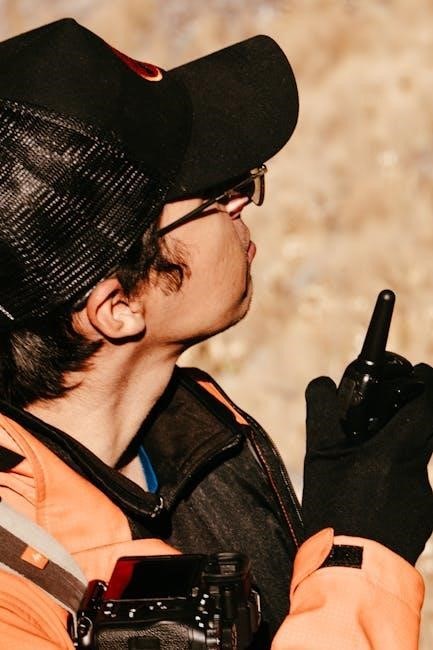
Onn walkie talkies typically include a 3.5mm earphone jack, offering a private listening experience and enhanced clarity in loud surroundings. Using an earphone allows for discreet communication, preventing broadcasts from disturbing others. It also improves reception in noisy environments by delivering audio directly to your ear, bypassing external interference.
When connecting earphones, ensure they are fully inserted into the jack for optimal audio quality. Some models feature volume control directly on the walkie talkie, while others rely on the earphone’s own volume adjustment. Be mindful of the volume level to avoid potential hearing damage, especially during prolonged use.
Similar to adjusting voice prompts on an Onn soundbar, certain walkie talkies may have settings to prioritize earphone audio over the internal speaker. This ensures that sound is always routed to the earphone when connected, even if the walkie talkie’s volume is turned up. Consult your user manual for specific instructions regarding earphone functionality and settings.
Safety Precautions
Prioritize safety when using your Onn walkie talkie. Avoid operating the device while driving or engaging in activities requiring full attention. Like all radio frequency devices, these walkie talkies emit low levels of radiofrequency (RF) energy. While generally considered safe, it’s prudent to adhere to recommended operating guidelines.
Maintain awareness of your surroundings, especially when using the device outdoors. Do not use the walkie talkie during thunderstorms, as it could pose a risk of lightning strike. Keep the device dry and avoid exposing it to extreme temperatures, as this can damage internal components and potentially create hazards.
Regarding antenna safety, never use a damaged antenna. If the device is dropped or the antenna is bent, inspect it carefully before use. Small children should be supervised when using walkie talkies to prevent misuse or accidental ingestion of small parts. Always follow the warranty information and contact Onn support for any concerns.
RF Exposure Information
Understanding RF energy is crucial for safe walkie talkie operation. Your Onn walkie talkie emits radio frequency (RF) energy, a form of electromagnetic radiation. This device is designed to comply with established safety limits regarding RF exposure. These limits are set by government regulatory bodies to ensure the safety of users.
To minimize exposure, maintain a recommended distance between your body and the walkie talkie during transmission. While specific distances vary by model, holding the device at least a few inches away from your face is generally advised. Avoid prolonged or excessive use, particularly in areas with limited RF exposure guidelines.
Individuals with medical conditions, such as implanted medical devices, should consult with a physician regarding potential RF interference. Further information on RF exposure limits and safety guidelines can be found on the websites of relevant regulatory agencies. Always prioritize responsible usage to ensure a safe experience.
Operating Temperature Limits
Maintaining optimal performance of your Onn walkie talkie requires adherence to specified temperature limits. Operating the device outside of these ranges can lead to reduced battery life, signal interference, and potential damage to internal components. Generally, Onn walkie talkies are designed to function effectively within a temperature range of -10°C to 40°C (14°F to 104°F).
Avoid exposing the walkie talkie to extreme heat sources, such as direct sunlight for extended periods, or leaving it inside a hot vehicle. Similarly, prolonged exposure to freezing temperatures can negatively impact battery performance and overall functionality.
If the device has been exposed to temperatures outside the recommended range, allow it to return to a normal operating temperature before attempting to use it. Consistent operation within the specified limits will contribute to the longevity and reliable performance of your Onn walkie talkie.
Warranty Information
Your Onn walkie talkie is covered by a limited warranty against defects in materials and workmanship from the date of purchase. The standard warranty period is typically 90 days, however, it’s crucial to retain your original proof of purchase to validate the warranty claim. This warranty doesn’t cover damage resulting from misuse, accidents, modifications, or normal wear and tear.
To initiate a warranty claim, you’ll generally need to contact Onn customer support with your purchase details and a description of the issue. They may request you to return the defective unit for inspection. The warranty covers repair or replacement of the defective product, at Onn’s discretion.
Please note that the warranty is non-transferable and applies only to the original purchaser. Any unauthorized attempts to repair or modify the walkie talkie will void the warranty. Refer to the included documentation or the Onn website for the complete warranty terms and conditions.
Contacting Onn Support
Need assistance with your Onn walkie talkie? Several avenues are available to reach their support team. While a dedicated phone number isn’t prominently advertised, the primary method is through the Walmart website’s customer support portal, as Onn is a Walmart brand. Navigate to Walmart.com and search for Onn support or use their help section.
You can also often find assistance through online chat features available on the Walmart website. This provides a quick and convenient way to address immediate concerns. For more complex issues, submitting a detailed inquiry through their online form is recommended, allowing for a thorough response.
Be prepared to provide your model number, purchase date, and a clear description of the problem you’re experiencing. Retaining your original packaging and proof of purchase will expedite the support process. Check the Walmart website frequently for updated support options and FAQs.
Regulatory Compliance
Onn walkie talkies, like all radio frequency devices, are subject to regulations set forth by governing bodies to ensure safe and responsible operation. These devices typically comply with standards established by the Federal Communications Commission (FCC) in the United States, and similar agencies in other countries.
Compliance ensures that the walkie talkies operate within specified frequency bands and power limits, minimizing interference with other electronic devices. Users are expected to operate the devices in accordance with these regulations, avoiding unauthorized modifications or operation outside of permitted frequencies.
Specific FCC rules address radio frequency exposure limits, requiring manufacturers to demonstrate that their devices meet safety standards. Detailed information regarding regulatory compliance can usually be found within the product documentation or on the manufacturer’s website. Adhering to these guidelines is crucial for legal and safe operation of your Onn walkie talkie.